
Why Every Travel Agency Needs a Well-Optimized Website
A travel agency website is more than just a platform to showcase vacation packages. It is the foundation of a travel business, serving as a booking hub, information center, and marketing tool. With travelers increasingly relying on digital platforms for planning and reservations, having a fully optimized travel agency website is essential.
In this guide, we will cover the ten essential features that every travel agency website should have to improve user experience, increase conversions, and boost search engine rankings.
1. A Visually Engaging and Mobile-Responsive Travel Agency Website
A travel agency website should have a visually appealing design that captivates users while maintaining functionality across all devices. With over 60% of online travel bookings made on mobile, ensuring a mobile-first design is critical.
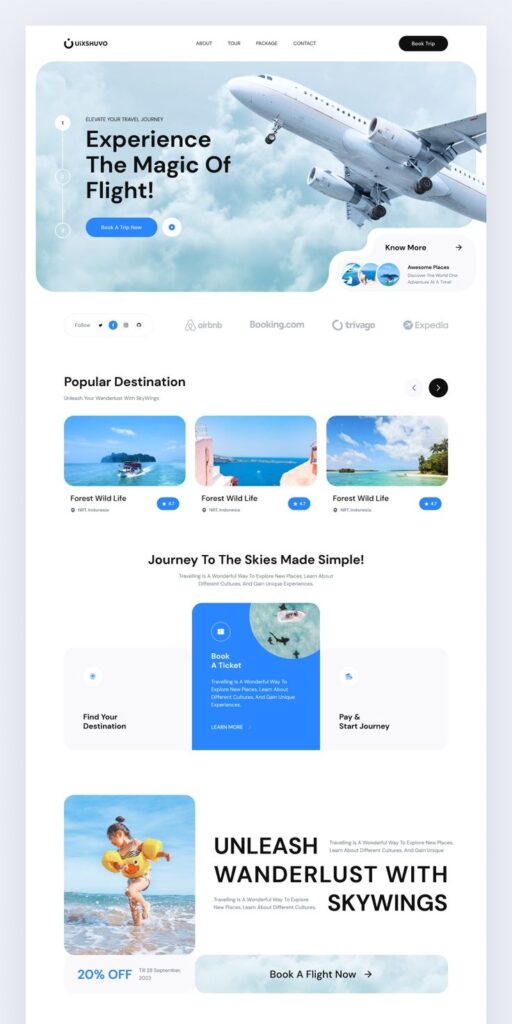
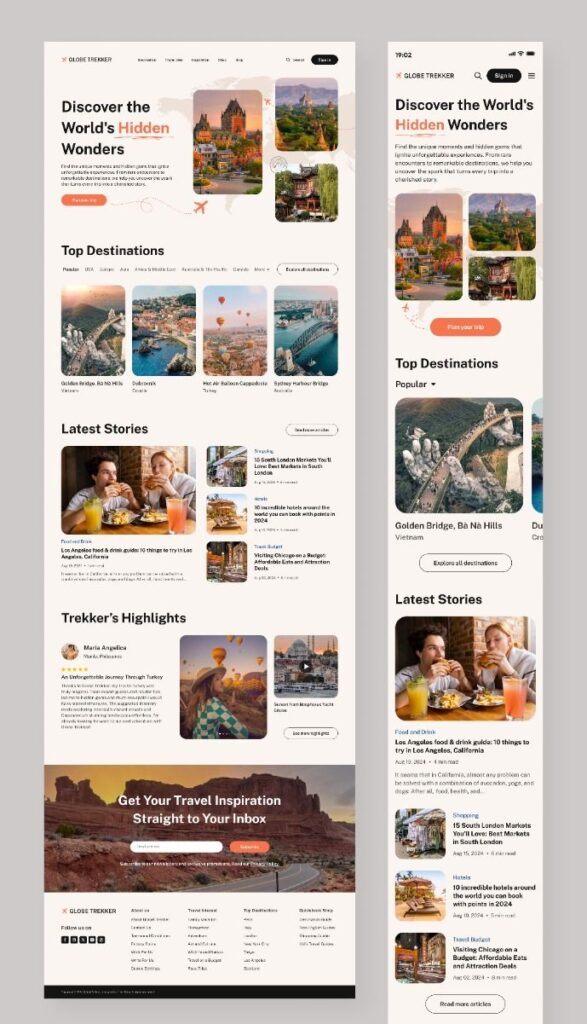
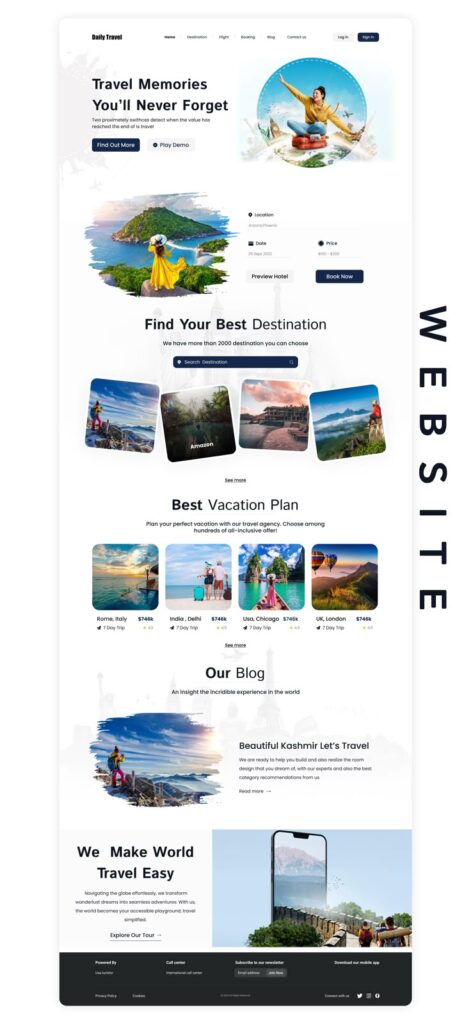
Source: Pinterest
Best Practices for a Travel Agency Website Design
- Use high-resolution images and engaging videos to showcase destinations effectively.
- Implement a well-structured, easy-to-navigate layout with clearly defined menus for destinations, tours, and booking options.
- Ensure fast loading speeds by optimizing images and reducing unnecessary scripts, as website speed is a crucial ranking factor in search engines.
- Use a consistent color scheme and typography that aligns with the brand identity of the travel agency.
- Include a well-designed homepage with strong call-to-action buttons like “Explore Destinations” or “Book Your Trip.”
A well-optimized travel agency website design not only enhances user experience but also improves search engine rankings by reducing bounce rates and increasing engagement.
2. Advanced Search and Seamless Booking System
An agency website should offer a user-friendly search and booking system that simplifies the process of finding and reserving trips. A complicated booking process often leads to increased cart abandonment rates, resulting in lost revenue.
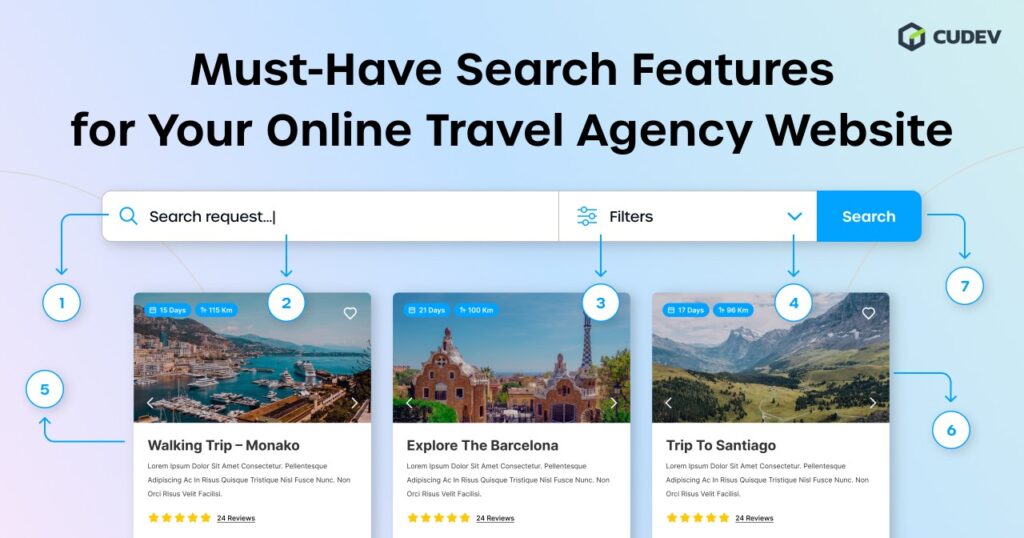
Source: Cudev
Key Features of an Effective Booking System on a Travel Agency Website
- Advanced search filters: Allow users to refine searches by destination, price range, travel duration, and activity type.
- Real-time availability and pricing updates: Ensure customers see the latest deals and available slots.
- Multiple secure payment gateways: Integrate trusted options such as PayPal, Stripe, Apple Pay, and Google Pay.
- Clear cancellation and refund policies: Display transparent terms to build trust with travelers.
- Instant booking confirmation and automated email notifications: Send trip details and receipts immediately after payment.
A seamless booking experience increases conversions and encourages repeat customers, making it a crucial component of a high-performing agency website.
3. SEO-Optimized Destination Pages
Destination pages are one of the most visited sections of a TA website. These pages should be optimized for search engines to attract organic traffic while providing useful information to potential travelers.
What to Include in Destination Pages
- A well-researched overview of the location, including top attractions, culture, and travel tips.
- Detailed itineraries outlining various trip durations and activities.
- Engaging, high-quality images and videos showcasing landmarks and travel experiences.
- SEO-friendly content with keywords like “best travel agency in [destination]” to enhance search engine rankings.
- Customer reviews and testimonials to build trust and encourage bookings.

By optimizing destination pages with valuable content and strategic keywords, an agency website can rank higher on search engines and attract more potential travelers.
4. Customer Reviews and Testimonials to Build Trust
A well-designed agency website should showcase customer feedback prominently, as travelers rely on peer reviews before making booking decisions.

How to Effectively Display Reviews on a Travel Agency Website
- Integrate third-party reviews from platforms like Google Reviews and TripAdvisor.
- Create a dedicated “Testimonials” page featuring past customer experiences.
- Highlight high-rated reviews on the homepage to establish trust immediately.
- Include user-generated content such as travel photos shared by previous clients.
- Encourage satisfied customers to leave reviews through follow-up emails and incentives.
Adding customer reviews not only enhances credibility but also improves search engine rankings, as user-generated content is valuable for SEO.
5. Travel Blog for SEO and Brand Authority
A blog section is a powerful tool for increasing organic traffic and establishing an agency as an industry expert. Regularly publishing informative and engaging content helps attract potential customers and keeps the website active.
Effective Blog Content Strategies for a Travel Agency Website
- Write destination guides, travel tips, and packing lists to provide valuable insights.
- Include trending topics such as “Best Solo Travel Destinations” or “Top Family-Friendly Vacation Spots.”
- Optimize blog posts with SEO keywords such as “affordable travel packages” and “luxury travel deals.”
- Incorporate visually appealing images and videos to enhance readability.
- Encourage social sharing by adding buttons that allow users to share articles on Facebook, Twitter, and Pinterest.
A well-maintained travel blog improves search engine rankings, increases brand visibility, and generates leads for a TA website.

Get Connected To us and Take your business to the next level.
Our highly experienced tech development team is one call away from you!
6. Live Chat and AI Chatbots for Instant Customer Support
Offering real-time customer support enhances the user experience and helps answer travel-related queries instantly. Integrating live chat and AI-powered chatbots can significantly improve customer satisfaction.
Benefits of Live Chat and Chatbots for a Travel Agency Website
- Provide 24/7 assistance, reducing response time for customer inquiries.
- Automate FAQs about booking, pricing, and travel policies.
- Guide customers through the booking process, minimizing cart abandonment.
- Offer multilingual support for international travelers.
By implementing live chat and chatbots, a TA website can enhance customer engagement and improve conversion rates.
7. Social Media Integration to Increase Engagement on a Travel Agency Website
Social media plays a significant role in travel inspiration and decision-making. Integrating social media platforms with a travel agency website enhances visibility and encourages interaction.
How to Leverage Social Media on a Travel Agency Website
- Display Instagram and Facebook feeds showcasing real travel experiences.
- Add social media share buttons to blog posts and travel packages.
- Feature influencer collaborations and customer travel stories.
- Use video marketing through embedded YouTube travel vlogs.
A strong social media presence can drive traffic to a travel agency website and increase brand credibility.

Source: Behance Pinterest
8. SEO Optimization for Higher Rankings on a Travel Agency Website
Search engine optimization is essential for attracting organic traffic to a travel agency website. Implementing the right SEO strategies ensures better visibility on Google.
SEO Best Practices for a Travel Agency Website
- Conduct keyword research and use terms like “trusted travel agency” and “affordable travel agency services.”
- Optimize meta titles, descriptions, and headers with relevant keywords.
- Improve site speed and mobile responsiveness to enhance user experience.
- Acquire backlinks from travel blogs and directories to boost domain authority.
SEO-optimized content helps an agency website rank higher, leading to increased bookings.
9. Secure Payment Options for a Safe Booking Experience
Ensuring a secure and seamless payment process is crucial for customer trust and satisfaction.
Key Features of a Secure Payment System
- Support for major credit and debit cards, PayPal, and digital wallets.
- Secure encryption to protect customer payment data.
- Transparent pricing with no hidden fees.
- Currency conversion for international travelers.
A secure and flexible payment system increases booking conversions on a travel agency website.
10. Multi-Language and Multi-Currency Support for a Global Audience on a Travel Agency Website
A TA website should cater to international customers by offering multi-language and multi-currency functionality.
Providing localized content enhances user experience and increases conversions for international travelers.
GET IN TOUCH WITH OUR TEAM
Schedule a Meeting
Final Thoughts
A well-optimized travel agency website is the key to attracting, engaging, and converting visitors into loyal customers. By implementing these ten essential features, a travel agency can enhance its digital presence, improve SEO rankings, and maximize bookings.