AI Infrastructure Expansion Is Becoming the Backbone of Digital Growth
AI infrastructure expansion has shifted from industry ambition to operational reality. Hyperscalers, semiconductor vendors, and public institutions are investing billions into new data centers, specialized hardware, and high-performance networks designed specifically for artificial intelligence workloads.
The reason is simple: modern AI systems demand enormous computational throughput. Training advanced models, running inference at global scale, and supporting real-time automation requires infrastructure far beyond traditional cloud environments. Organizations that understand this shift are already redesigning their platforms to be AI-native rather than AI-enabled.

Get Connected To us and Take your business to the next level.
Our highly experienced tech development team is one call away from you!
Why the Market Is Accelerating So Quickly
Three forces are driving AI infrastructure expansion.
First, model complexity continues to rise. Larger parameter counts and multimodal capabilities dramatically increase GPU, memory, and storage requirements.
Second, enterprises now expect AI in production, not experimentation. From support automation to fraud detection and personalization, uptime and latency matter.
Third, regulatory and data-sovereignty pressures require secure, geographically distributed compute environments.
Together, these forces push providers to build dedicated AI regions, high-density accelerator clusters, and ultra-fast interconnects.
What AI-Ready Infrastructure Actually Means
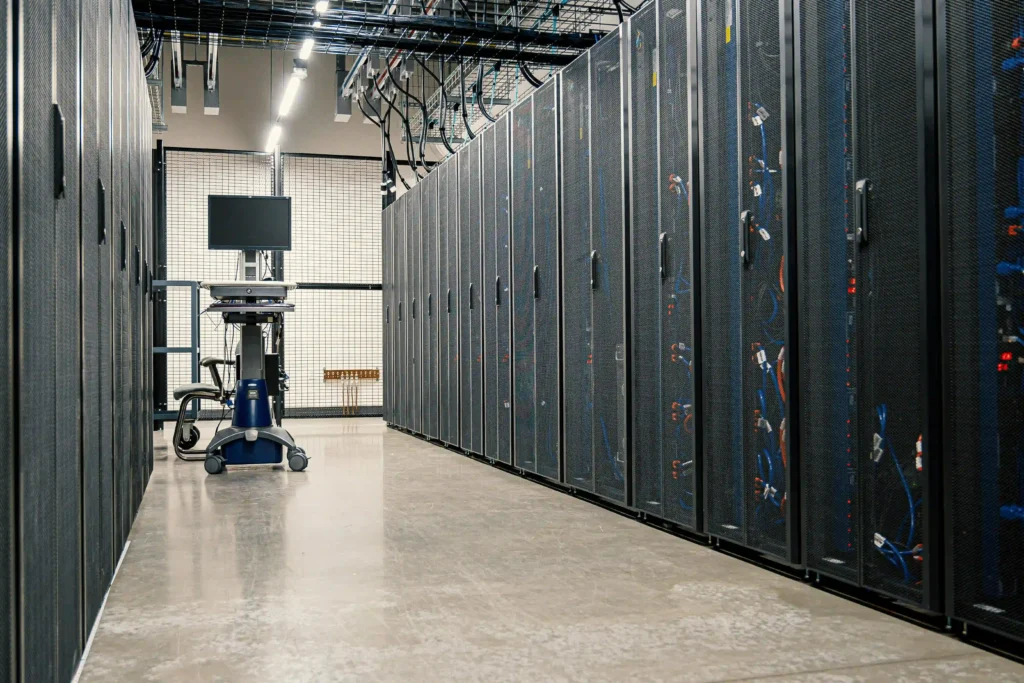
Modern AI infrastructure is not just “more servers.” It typically includes:
• GPU and TPU superclusters
• High-bandwidth, low-latency networking
• Distributed storage optimized for massive datasets
• Managed orchestration for training and inference
• Security layers for confidential workloads
• Energy and cooling innovations for dense compute

This architecture allows companies to scale model training from days to hours and support millions of predictions per second without service degradation.
Impact on Enterprise Architecture
AI infrastructure expansion is forcing a rethink of how digital systems are built.
Instead of static applications, platforms are evolving toward elastic pipelines where data ingestion, feature engineering, model execution, and monitoring operate continuously. Infrastructure decisions now influence product capability, customer experience, and speed of innovation.
Businesses that modernize early gain:
• faster deployment cycles
• improved automation
• stronger analytics depth
• reduced marginal cost per prediction
• the ability to launch AI-driven features competitors cannot easily replicate
Firms delaying modernization often face integration bottlenecks and spiraling compute expenses later.
Security, Compliance, and Governance
As compute footprints grow, risk surfaces grow with them. AI workloads frequently involve personal, financial, or proprietary information. Infrastructure must therefore support encryption, isolation, traceability, and audit readiness.

Providers expanding AI capacity are embedding governance tooling directly into their platforms. Expect tighter integration between infrastructure, model lifecycle management, and regulatory reporting.
For many industries, compliance readiness will soon determine which vendors are even allowed to bid for contracts.
Cost Dynamics Are Changing
While large-scale AI infrastructure appears expensive, unit economics are improving. New chip generations deliver more performance per watt, orchestration software improves utilization, and competition among cloud providers continues to push efficiency.
The real financial risk is under-provisioning. Slow training cycles and poor inference performance can cost more in missed opportunities than hardware investment.
What Smart Organizations Are Doing Now
Forward-looking companies are:
• auditing workloads for AI readiness
• redesigning applications around scalable compute
• building internal AI platforms instead of ad-hoc experiments
• negotiating long-term cloud and accelerator partnerships
• investing in observability and cost management
• preparing hybrid and edge AI strategies
They view infrastructure as a strategic asset, not a background utility.
GET IN TOUCH WITH OUR TEAM
Schedule a Meeting
The Road Ahead
AI infrastructure expansion will intensify. Expect purpose-built AI cities, specialized semiconductor supply chains, and tighter collaboration between governments and private cloud operators. Access to compute will increasingly define market leadership.
The winners will be organizations that align product vision, engineering practices, and infrastructure investment early.
Conclusion
AI infrastructure expansion is the foundation on which the next generation of digital services will run. Greater compute availability unlocks faster innovation, deeper intelligence, and new business models. Companies that treat this as a core strategic priority rather than a technical upgrade will define the competitive landscape of the coming decade.
GET IN TOUCH WITH OUR TEAM